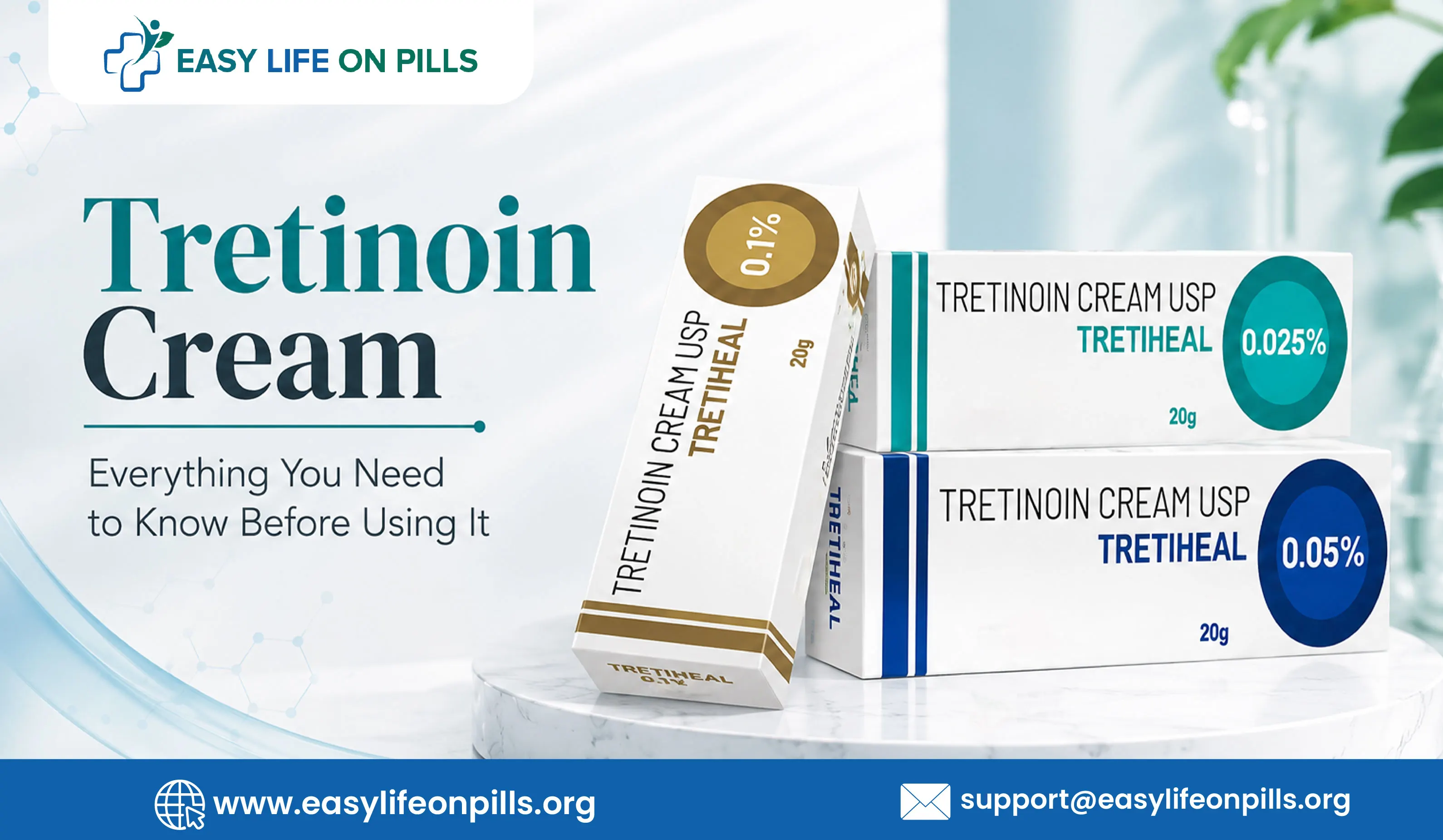
Tretinoin Cream: Everything You Need to Know Before Using It
When it comes to reliable medicated skincare creams to reduce sun spots, acne, hyperpigmentation, and other issues, Tretinoin is a popular choice.
Tretinoin is a prescription topical retinoid primarily used to treat acne. Some formulations may also improve the appearance of fine wrinkles, uneven pigmentation, and sun-damaged skin. It is available in different dosage strengths to suit the user's needs, so the strength and application frequency should be determined by a healthcare professional.
The cream is an effective product; using it correctly is important. If you do not use Tretinoin cream properly, it can lead to irritation, inflammation, and peeling.
So, in this blog, we will take you through everything you need to understand about what Tretinoin cream is used for, its administration, benefits, expected initial tretinoin side effects and precautions, treatment duration, and more.
Tretinoin Cream: Uses, Benefits, Application and Precautions
As a derivative of Vitamin A, Topical tretinoin is a retinoid medication. With retinoic acid, it regenerates skin cells, cleans clogged pores, and clears out not just acne and aging-lines, but keeps your skin young. It works quickly compared to other compositions in the market.
When it comes to how long tretinoin takes to work, it may take a few weeks or months to show visible results. But it is still a fast-acting agent. With regular use, it delivers an even tone by eliminating dullness and hyperpigmentation usually caused by exposure to sunlight and UV rays.
Following a routine boosts the production of healthy cells on the surface. The cream works within the skin to support cell turnover, rejuvenating the base and middle layers equally to shed dead skin cells.
The Benefits of Tretinoin: Why Choose It?
Let us break down the benefits of tretinoin as a topical cream:
- Elimination of Acne: This cream was targeted to treat acne initially. Since the cream keeps the skin pores clean, and does not allow dead cells settling in the pores and mixing with the skin oil (sebum), it nourishes skin overall. Thus, the cream soon gained recognition as Tretinoin for blackheads and whiteheads, inflammation, and reduction of cystic acne.
- Produce Collagen for Anti-Aging Effect: For skin elasticity and smoothness, collagen is important. It keeps the skin firm and protects it against sagging. This is what Tretinoin does – triggers collagen fiber production as well as stops existing collagen from eroding. As a result, regular application visibly reduces fine lines in 3-6 months. Thus, this cream is often preferred to fight aging and dull appearance of skin.
- Combat Hyperpigmentation and Dark Spots: Skin damage from too much exposure to sunlight, hormonal imbalance, inflammation, etc. These may leave dark spots and aging marks on skin, leading to excessive pigmentation. Moreover, old acne can leave scars and blemishes. So, applying Tretinoin maintains an even skin tone by reducing high melanin concentration at pigmented skin layers.
- Improve Skin Texture: It works as a medicated exfoliant by improving skin cell turnover, thereby improving its texture as well. It keeps at bay skin roughness and burning. It also increases the smoothness of skin and makes it look more radiant and glossier.
Tretinoin Strengths: Which Is Ideal For You?
Since the severity of skin concerns can differ, Tretinoin strengths range from a low 0.025% to a high 0.1% strength, taking care of mild to serious skin problems. The exact Tretinoin strength you need will depend on your skin condition and what the doctor recommends. Here is a brief:
- Tretinoin 0.025%: The Tretinoin 0.025% cream is for sensitive skin and for people starting with this cream for the first time. It may prevent skin aging. It is also used to build skin tolerance to the treatment before you use a higher dose.
- Tretinoin cream 0.05%: Then you have Tretinoin cream 0.05%, useful against visible fine lines on skin, moderate acne, and inflammation/damage. It is also one of the standard doses of this cream.
- Tretinoin 0.1%: The high dose of Tretinoin 0.1% is for stubborn wrinkles, aging skin texture, cystic acne, and severe skin blemishes. Use it carefully as per guidelines of a doctor. Otherwise, it may lead to skin dryness and peeling.
Remember that a skin treatment requires patience and following Tretinoin usage tips of a professional. While some individuals get the best results already from 0.025% or Tretinoin cream 0.05% strengths, others may require 0.1%. The application and treatment duration, dose alteration will also differ from one person to another.
How to Safely Apply Tretinoin Cream?
- Before moving ahead, do note that apply only a small amount of the cream. Large amounts will not make the medication work faster or better. Here are other things to keep in mind for the best way to use Tretinoin cream:
Before Use: The Tretinoin cream is for nighttime application only. Before use, wash your face gently to remove surface oil, dirt, pollutants, makeup, etc. Do not clean with any exfoliating substances, facial scrubs, or fragrant cleansers. - Keep the Skin Dry: Let your skin dry properly after the wash before putting on Tretinoin. The cream may absorb in skin faster than necessary if used on wet or damp skin, leading to redness or burning.
- Applying Tretinoin: Once the skin dries, take a pea-size amount of cream on your fingertip. Add a bit on your chin, cheek, forehead and gently spread the cream across the face. Make sure to avoid applying at the eye area, edge of the lips, and nose corners.
- Adding Moisturizer: As the cream settles on the skin, give it a few minutes before applying a skin moisturizer that contains hyaluronic acid, ceramide, or glycerin. Keeping the skin moisturized after tretinoin helps hold hydration, preventing dryness.
- Directions for Sensitive Skin: For sensitive and overreactive skin, firstly apply moisturizer thin layer and wait for 10-15 minutes. Follow the Tretinoin application thereafter, adding another thin layer of moisturizer thereafter.
How Does Skin Treatment Process Flow With Tretinoin?
The topical treatment may cause some discomfort initially. These effects may occur during the adjustment period; however, contact a healthcare professional if they are severe:
- Skin Breakouts and Blemishes: Increase in blemishes or whiteheads. This is a consequence of retinoid adjustment, increasing cell turnover. These effects usually improve in 2-6 weeks.
- Mild Flaking or Peeling: While the Tretinoin cream for smoother skin ensures a radiant and even-toned complexion, initially, you may experience mild flaking or peeling, especially at the chin or mouth. That’s because dead skin cells are wearing off the top layer.
- Temporary Sensitivity: You may also encounter temporary skin sensitivity and tightness to other skin products, leading to mild dryness or redness. However, these Tretinoin results are common and do not lingering for long. Give a few weeks for the skin to adapt to the new medication.
To Conclude
Now that you are aware of what tretinoin does, you can begin undergoing the skincare wellness treatment by choosing the right strength for your skin condition. As for how long it takes for Tretinoin to work, weeks 1-4 may encompass mild dryness, peeling, or flaking as it regenerates, while weeks 6-8 will start to show initial relief from acne and breakouts.
Finally, consistently following the Tretinoin skincare routine will show a positive impact in 3-6 months. After a year of using tretinoin, the skin will look a lot clearer fresh; fine lines may appear less noticeable over time, and skin texture will be a lot firmer. However, seek guidance and advice from a healthcare professional at Easylifeonpills, and go through our terms and conditions and shipping information pages before you buy and start the use of topical tretinoin cream.